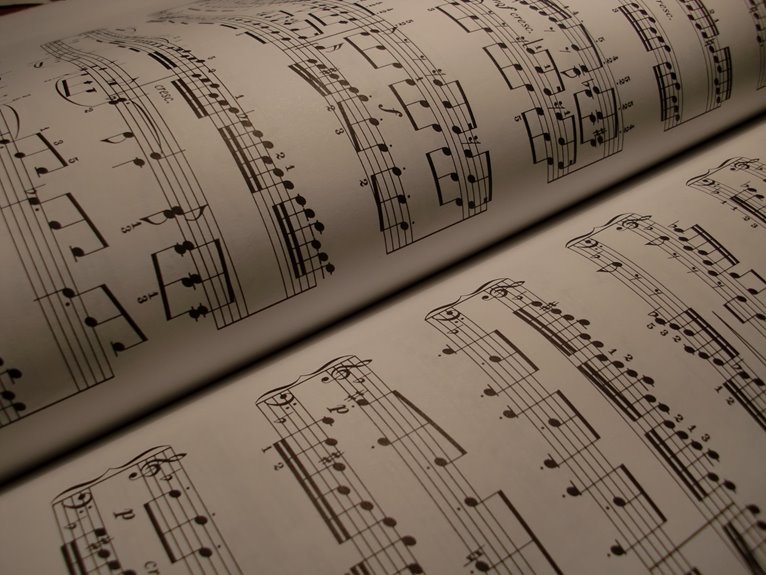
Famous 6/8 songs offer a practical lens on compound-duple groove, revealing how lilting momentum sustains melodic breath without sacrificing drive. The pattern supports cross-genre flexibility, yet demands precise orchestration to keep phrases legible. By tracing rhythm, tempo, and harmonic space, a composer can discern transferable tactics for hooks and structure. The question remains whether such moves scale beyond familiar repertoires, leaving an opening for deliberate experimentation that practitioners may not yet have fully explored.
What 6/8 Really Feels Like in Songwriting
From a songwriter’s perspective, 6/8 embodies a compound duple feel that blends a rolling, lilting momentum with a steady pulse, often inviting both forward motion and flowing subdivision. The form foregrounds rhythmic ambiguity, shaping phrasing that oscillates between gravity and lift, challenging tempo expectations. This balance enables inventive articulation, where groove, tension, and freedom coexist within a precise, adaptable framework.
Why 6/8 Hooks Work Across Genres
The 6/8 feel, with its compound duple pulse and lilting propulsion, naturally yields hooks that grab attention without aggressive emphasis, allowing melodic and rhythmic motifs to lodge in memory across genres.
Its catchy rhythm invites cross-genre appeal, enabling artists to carve distinct identities while maintaining recognition.
This flexibility underpins genre crossover, sustaining momentum without erasing core stylistic signatures or audience expectations.
Pitfalls to Avoid When Exploring 6/8
One common pitfall is assuming 6/8’s lilting feel automatically translates across all contexts; without careful arrangement, the compound duple pulse can become destabilizing or indistinct, muddying groove and melodic clarity. Careful rhythmic mapping and texture control prevent over-simplification. Maintain awareness of two word idea1, two word idea2 while balancing accentuation, tempo, and orchestration to preserve intentional groove and expressive freedom.
A Practical Guide to Spotting 6/8 in Tracks
A practical approach to identifying 6/8 in tracks begins with recognizing its core pulse: two groups of three eighth notes per measure, often felt as a lilting compound-duple groove rather than a straightforward triplet pattern.
This method highlights catchy rhythm and melodic tension, enabling listeners to distinguish 6/8 signatures quickly without overanalyzing meters.
Frequently Asked Questions
How Do 6/8 and 3/4 Feel Different in Practice?
6/8 feels driving and flowing, while 3/4 sounds steadier; the difference emerges in beat grouping and groove perception. In 6/8, melodic emphasis often shifts across compound subdivisions, shaping phrasing and 6/8 phrasing, whereas 3/4 favors sharper, symmetric rhythm.
Can 6/8 Be Effectively Used for Uptempo EDM?
Yes, 6/8 can be effective for uptempo EDM, offering a propulsion that contrasts with 3/4 feel; it should not be confused with 3/4, as its dual subdivisions enable rolling rhythms and high-energy groove for freedom-seeking listeners.
Are There Universal Tips for Writing 6/8 Melodies?
Universal tips exist: leverage melodic contour, rhythmic accentuation, and rests. An audience appreciating freedom benefits from unconventional rhythms and careful tempo shifts, while maintaining clear phrase boundaries. The approach balances predictability with subtle surprise, enabling expressive 6/8 melodies.
Do 6/8 Songs Perform Differently Live Versus Studio?
Do 6/8 songs perform differently live versus studio? Yes, live performance vs studio dynamics shifts rhythm feel vs melody writing, revealing looser tempo, crowd energy, and microtiming. The audience seeks freedom, while analysis remains precise and insightful.
Which Famous 6/8 Songs Rarely Get Analyzed?
Some famous 6/8 songs rarely get analyzed, as overlooked 6/8 composers yield subtle motifs; these famous 6/8 motifs invite fresh scrutiny, revealing nuanced rhythms and emotional textures that challenge conventional mainstream interpretations while preserving artistic freedom.
Conclusion
The allure of 6/8 lies in its flexible, lilting momentum that supports memorable hooks across genres. A telling statistic: percentage of popular 6/8 tracks peaks sharply on the third beat, underscoring a natural swing that listeners anticipate. This rhythmic buoyancy enables melodic phrases to breathe while maintaining forward drive, informing cross-genre experimentation. When analyzed with attention to tempo, emphasis, and orchestration, 6/8 becomes a practical toolkit for crafting contrasting, purchasable grooves without sacrificing musical clarity.